|
|||||||||||||
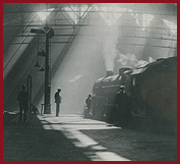
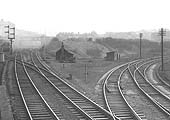
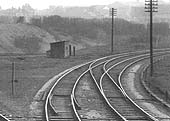
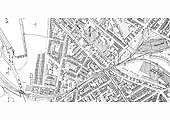
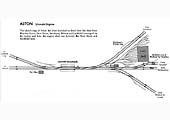
Aston StationAston station was opened by the London North Western Railway (LNWR) in 1854 and is situated on an embankment adjacent to and above the Lichfield Road. Initially it serviced only the original 1837 Grand Junction Railway route (which together with the London & Birmingham Railway and others had been incorporated into the LNWR in 1846) but with the opening of the line to Sutton Coldfield by the LNWR in 1862 it served both routes. The station owes its existence to the refusal of James Watt junior, the tenant of Aston Hall and son of the renowned engineer, to allow the railway to encroach upon Aston Park in the grounds of the Hall as originally planned in the Grand Junction's Act of 1833. The line had originally been intended to enter Birmingham through a mile-long tunnel under the high ground on which the park is situated in order to provide a 'face on' junction with the L&BR. This would have allowed a continuous end to journey from London to Manchester of Liverpool something that was not achieved until New Street station was opened in 1851. Following the formation of the LNWR in 1846, the railway began to expand its lines around the Birmingham area, in particular on the ex-GJR route from Curzon Street to Wolverhampton which only had five stations between these two points along its 14½ mile journey. Two of the areas to benefit from this expansion were the districts of Aston and Nechells being served by Aston station located in the heart of what is now inner-city Birmingham. In 1880 the LNWR opened a line from Aston to Stechford on the Birmingham to Coventry line which also gave access to the Metropolitan Carriage and Wagon Company's works (later Metro-Cammell) at Saltley, reached by a short branch from what the LNWR termed Washwood Heath Junction at the point where the Aston-Stechford line passed over the Midland Railway from Birmingham to Derby. The new line was also used for the Wolverhampton portions of some London expresses and also to provide through carriages between Euston and Walsall. In the same year, the LNWR opened a line for freight traffic from Aston to Windsor Street goods depot, the latter closing in 1980. The LNWR's Aston locomotive depot (Aston Shed) was opened in 1883 in the area between the Aston to Birmingham and the Aston to Stechford lines and with an entrance on Long Acre, Nechells. The station became part of the London, Midland and Scottish Railway during the Grouping of 1923. It then passed to the London Midland Region of British Railways on nationalisation on 1st January 1948. Passenger services grew over time reflecting the increase in the number of commuters generated by the rapid expansion of Birmingham. In January 1858 eight trains on the Birmingham to Wolverhampton via Bescot Junction and Willenhall route called at Aston station. The first at 8:21 am and the last at 9:11 pm on weekdays. In the opposite direction, on weekdays, nine trains originating from Wolverhampton called at Aston station, the first arriving at 8:51 am with the last at 10:25 pm. Sunday services consisted of six trains in each direction. The timetable shows one "government" or Parliamentary train in each direction, running every day. Most trains provided through carriages to Derby via Walsall and Lichfield, dividing at Bescot. By the time the LNWR introduced its last independent timetable on 3rd October 1921 (it was amalgamated with the Lancashire & Yorkshire Railway on 1st January 1922, a full year ahead of Grouping) the service to and from Lichfield City, the extension from Sutton Coldfield to Lichfield having opened in 1884, was approximately operated on a hourly basis during weekdays, with additional trains terminating at Four Oaks approximately every 30 minutes. Trains to Wolverhampton and Walsall ran at irregular intervals on weekdays. On Sundays, five trains ran between New Street and Sutton in both directions with the same number running to and from Walsall. An interesting service was the New Street to New Street "circular" via Aston, Perry Barr, Soho Road and Monument Lane, with two trains completing the full anti-clockwise circuit, but only one in the opposite direction. Most clockwise trains finished their journey at Vauxhall and Duddeston. There was no Sunday service. British Railways' London Midland Region timetable dated 10th September 1951 shows again an irregular interval service of approximately hourly trains to and from Walsall with a similar service to Lichfield City via Sutton, with some trains running only as far as Four Oaks. In the Summer 1963 timetable, by which time Diesel Multiple Units were operating on both routes, there was a regular-interval service pattern throughout the day: on weekdays every hour to Walsall and Rugeley Town, and every 30 minutes to Sutton and Lichfield, with occasional trains still terminating at Four Oaks. The station remains open today (2012) with Aston receiving regular services on both the Cross-City Line, from Lichfield Trent Valley to Redditch and the Walsall Line, from Wolverhampton to Walsall via Birmingham New Street. In the evenings, services for the Chase Line call Aston. The booking office is at grounc level on Lichfield Road, the platforms being reached by steep flights of steps. Ed Purcell writes in the LNWR Yahoo Group, 'The Royal Scot (and the other WCML expresses) did use the Coventry line on many Sundays in the late 1950s / early 1960s. However, they never went through New Street. They used the Stechford - Aston (normally freight only) line and thence via Bescot to come out north of Wolverhampton on the Stafford line before rejoining the WCML. Occasionally they used the Hednesford - Rugeley line, though I gather the latter was less common. Aston was the place to be on some Sundays in 1960 - 62 as the WCML services all ran through and occasionally the NE/SW route ran through there as well with diversions to that route. This meant the length of the station at Aston served both routes - replacing Tamworth as the crossing point for those two routes. As I recall No 46129 was quite often seen on the Sunday Royal Scot ( instead of a pacific) and No 71000 was often on the down 'Red Rose'. The class 44 Peaks were on the WCML at that time as well as the Class 40s. It was not uncommon to see a steam/ diesel double header because of the unreliability of the diesels (particularly the 40s)'. Ordnance Survey Maps and Schematics of Aston station and junctions
|
|
||||||||||||

 Donate
 Facebook
 Search